Rick Alpers’ San Jose Stories

At Play On Words, we love to feature writers in our own backyard–San Jose writers who have an intimate knowledge of the Valley of Hearts Delight and are proud to engage in a literary conversation. When it comes to San Jose stories, Rick Alpers has quite a few up his sleeve. We’re thrilled to perform three short excerpts of his novel-in-progress, Van Tribe, which follows a cast of characters living in downtown San Jose, on June 3 at Play On Words: Take Flight.

Rick is a San Jose native with family roots dating back to 1871 in central California. He graduated from San Jose State in physical education and earned a master’s degree, along with a lifetime teaching credential, from Cal Poly San Luis Obispo. He taught high school PE at Santa Teresa High for four years before going into commercial construction, where he still works. Rick writes for relaxation  and the creativity it provides. His series of vignettes is part of a novel with the working title of Van Tribe.

Rick Alpers
Rick Alpers

What inspired “Van Tribe”?

The working title “Van Tribe” came from a thought I had about all the tribes of people who have lived on the Guadalupe River, and the river’s effect of our community. The latest and on-going “state” of the river is almost forgotten by current residents, but the constant motif is the river and how it has welcomed so many. The Native Americans lived here with the Grizzly bears, the Spanish settlers raised crops and cattle here, the American settlers set up canneries to produce canned fruit for our country, the inventors have used this valley for the creative talent to communicate to the world. All this time we have used the river and its shelter, water and housing.

What inspires you to write?

My inspiration to write is from my father and mother. They understood that each of us is a writer.

What author inspires you?

TC Boyle.

What book has had a profound effect on you?
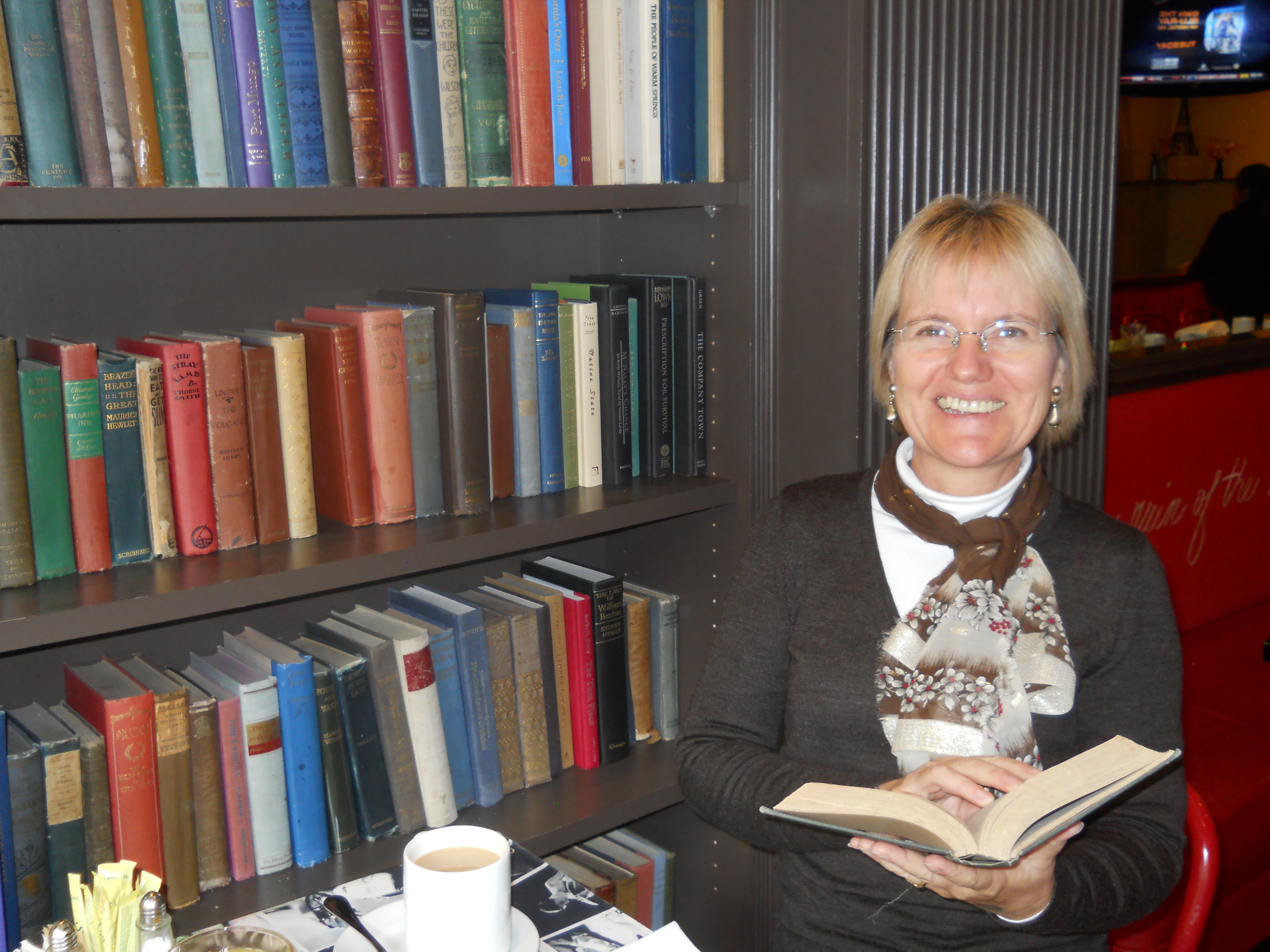
JPS Brown’s The Outfit.

Flash Fiction Meets Play On Words!

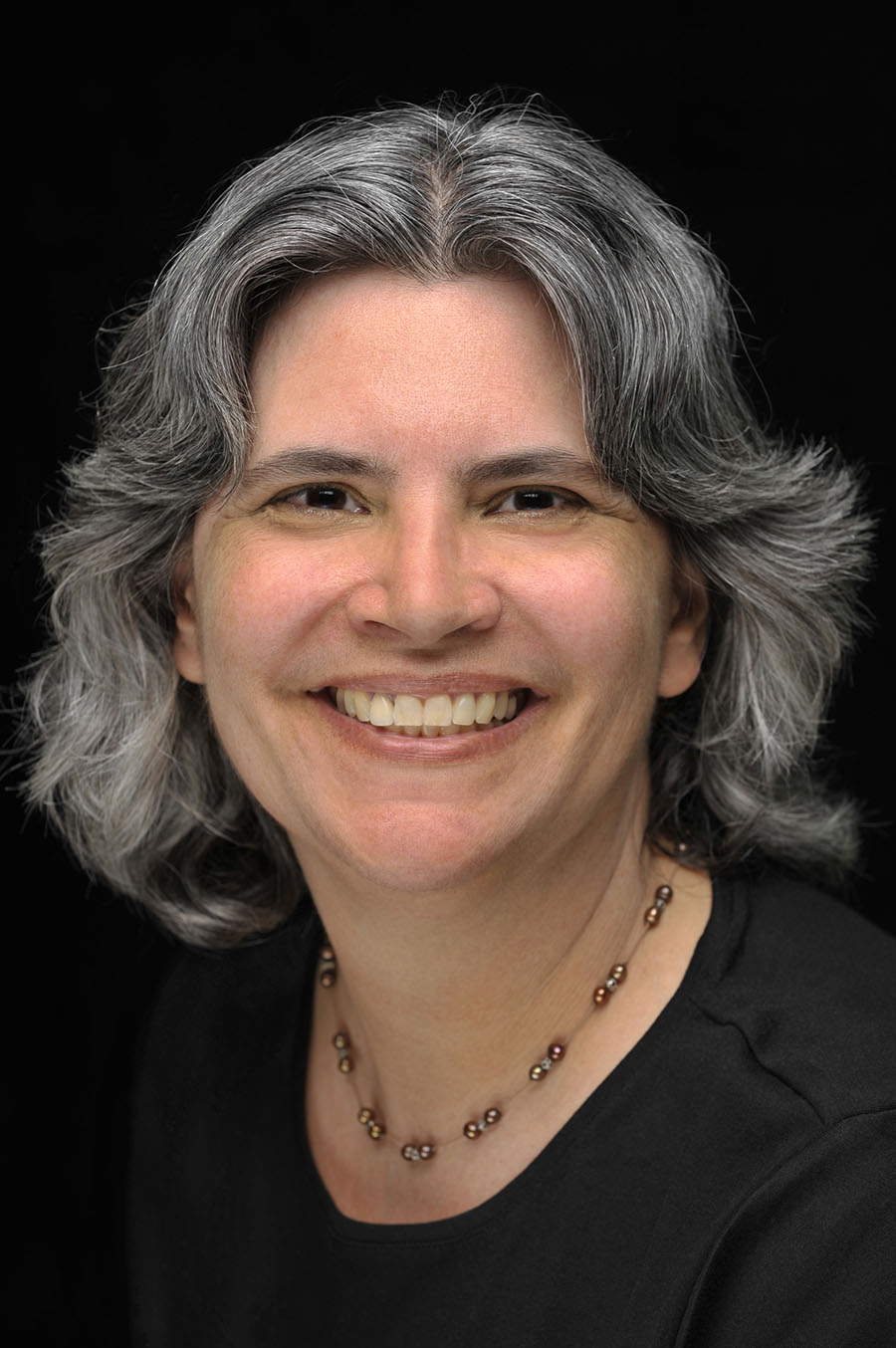
If you live in San Jose and you like to write, you need to meet Lita Kurth. Lita and her colleague Tania Martin run the fabulous Flash Fiction Forum, a monthly reading series that highlights short, fantastic writing. We’re really excited to produce her short piece, “Bride,” on June 3 at Cafe Stritch.

Lita (MFA Pacific Lutheran University) has had work published in Fjords Review, Brain,Child, Main Street Rag, Tikkun, NewVerseNews, Blast Furnace, eliipsis…literature and art, Compose, Redux, Lunchticket, Raven Chronicles, Tattoo Highway, Composite Arts, Verbatim Poetry, the Santa Clara Review, Vermont Literary Review, DNA, and others. She contributes to Tikkun.org/tikkundaily, TheReviewReview.net, and classism.org.

Lita Kurth
Lita Kurth

Publications and Awards:

My creative nonfiction (CNF) piece, “Pivot,” in the anthology, Becoming: What Makes a Woman, was nominated for a Pushcart Prize. My CNF “This is the Way We Wash the Clothes,” 2012, won the 2014 Diana Woods Memorial Award (summer-fall 2014) and appeared in Lunchticket 2014. When I was eleven, I won fourth place (and $15!) in an essay contest sponsored by the Rex Rod and Gun Club of Milwaukee.

Upcoming Events:

Lita and Tania are hosting the next Flash Fiction Forum TONIGHT (May 13), 7 PM, at San Jose’s Works Gallery. Lita also teaches the Lita Kurth Writing Workshops in her home. She also offers a four-week, online, flash fiction class in July/August, and will be teaching Intro to Creative Writing at De Anza College this fall.

What inspired you to participate in Play On Words?
I heard about it from Gary Singh and thought it was fantastic.

 Which writers or performers inspire you?
The timeless Broooooooce, i.e., Springsteen, Marguerite Duras, Jim Ray Daniels (especially his latest collection, Eight Mile High)

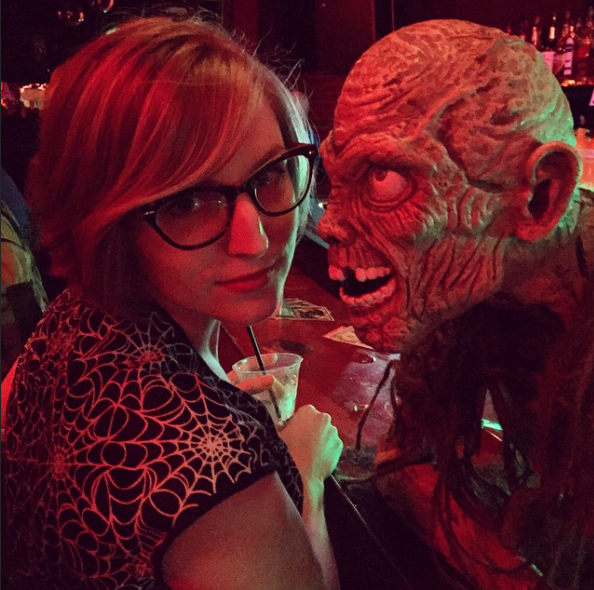
Up Close and Personal With Sarah Lyn Rogers

This June we’re excited to produce “Cardio Tai Chi,” a short piece by Sarah Lyn Rogers. This is our second time working with Sarah. You can watch Tiffany Viorge’s May 2014 performance of Sarah’s beautiful piece, “Ephemera,” right here on our blog. Truth be told, we are Sarah fans.

Sarah Lyn Rogers is a writer, editor, and illustrator from the San Francisco Bay Area. When Sarah’s not writing or doodling, she selects short fiction for The Rumpus, gives editorial feedback to young novelists through Society of Young Inklings, and plays drums in a chamber pop band called Elflock. For more of her work, visit http://sarahlynrogers.com.

She has been awarded the James D. Phelan awards in metrical verse, free verse, and familiar essay, as well as the  Academy of American Poets’ Virginia de Araujo Award. She also has a poem forthcoming in Caesura.  Her short stories, essays, and poetry have been published in The Rumpus, Reed Magazine, 3Elements Review, Chanterelle’s Notebook, Iris Brown Lit Mag, Vine Leaves Literary Journal, and two anthologies from PushPen Press.

Sarah Lyn Rogers
Sarah Lyn Rogers

What inspired you to participate in Play On Words?

Nicole Hughes, who used to be one of you Players on Words, invited me last year. Also my boyfriend knows Melinda and a couple of the actors (hi, Adam!) from his Foothill Conservatory days. The world is small.

Which writers or performers inspire you?

I swear no one paid me to say this, but Melinda is a wonderful performer. I really dig her pacing and inflection—they bring the pieces to life by making audience members sit with them a little longer instead of skimming over the words as we might with our eyes. Annnd Julia Halprin Jackson always has such an interesting angle in her work. I really like her monologue, “Sweet on You,” about mistaking an iPod for an insulin pump on a man who might be a kindred spirit.

Name a book or performance that fundamentally affected you.

I don’t know that this fundamentally affected me, or what that would say about me, but I got to see a production of August: Osage County at Oregon Shakespeare festival a few years back and it was my favorite play experience. I loved Barbara, the oldest daughter character, trying to hold everything together amid the depth and chaos of family dynamics.

Mara Sherman’s “Stage Kiss”

Introducing playwright Mara Sherman! Mara Sherman’s short play “Stage Kiss” is funny, sweet, and, ultimately, exactly the kind of play we at Play On Words like to produce. Join us on June 3 at Cafe Stritch to see it all in person.

Mara Sherman
Mara Sherman

Mara is a playwright, director, and actor currently based in Northern Virginia. Her plays have been produced as part of student play festivals at both UC Santa Cruz and Mary Baldwin College. She recently directed a  minimalist six – actor Romeo & Juliet that toured to various Virginia colleges, high schools, and theaters. Favorite acting roles include Dionyza in Shakespeare’s Pericles: Prince of Tyre, and Lady Kix in Thomas Middleton’s A Chaste Maid in Cheapside. She has a BA in Literature from UC Santa Cruz and a master’s degree in Shakespeare and Performance from Mary Baldwin College.

What inspired you to participate in Play On Words?
The intersection of art and literature, of writing and performance, is totally my jam. I love plays that are based on poems or short stories or novels or scripture. I love the idea of written work being inspired by live performance. When it really comes down to it I am a big ole nerd and I liked the idea of getting to play around with other nerds.

Which writers or performers inspire you?
Paula Vogel, Sarah Ruhl, Mary Zimmerman, Lorraine Hansberry, Thomas Middleton, (everyone drop what you are doing right now and go read Revenger’s Tragedy) and of course, Tegan and Sarah.

Name a book or performance that fundamentally affected you.
The best piece of theater  I have ever seen was the world premiere of Luis Alfaro’s Bruja at the Magic Theater, about two years ago. I love the Greeks, especially Euripedes and especially Medea, and it was pure bliss to see one of my favorite plays adapted so successfully for the modern stage. It’s weird to call a play about a woman who kills her children “joyful” but I left the theater absolutely brimming with happiness.

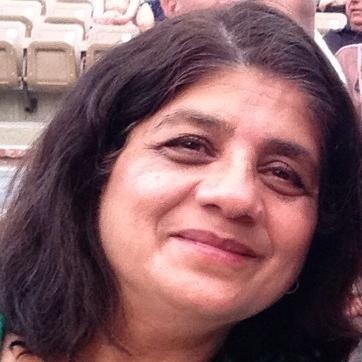
Pratibha Kelapure Teaches Us to Swim

We are thrilled to produce “Swimming Lessons,” a short piece by local writer Pratibha Kelapure, at Play On Words: Take Flight, made possible through the generosity of the The John S. and James L. Knight Foundation, in partnership with the San Jose Downtown Association, and our partnership with San Jose’s Cafe Stritch. 

Pratibha Kelapure
Pratibha Kelapure

Pratibha is a humble writer, editor, literary coach, and performer. She is the founding editor of The Literary Nest journal. In her previous life, she served the Silicon Valley as a VLSI Software Engineer. Other than that she is a wife, mother, and a community volunteer.

Her recent awards include:

  • Honorable Mention for the poem “Monet on Her Mind” in the Los Gatos Poet Laureate Poetry Contest
  • First place in the South Bay Writers WritersTalk Essay Contest in January 2014, July 2014, and January 2015
  • The Winner of Flash! Friday Microfiction Contest Aug 2014
  • For more details, check out her website

What inspired you to participate in Play On Words?
I am a fan of all the performing arts.

Which writers or performers inspire you?
Inspiration comes from unexpected sources. I discover new writers and performers every day.

Name a book or performance that fundamentally affected you.
I am probably showing my age here, but The Mill on the Floss by George Eliot had a huge effect on me. When I was 10, I saw a local performance of Kathak Dance that stuck with me and sparked my interest in the performing arts.

Author Spotlight: Betsy Miller

Betsy Miller
Betsy Miller

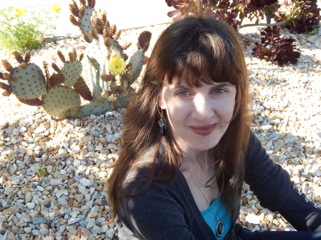
This June we are thrilled to produce “Bees,” a short piece by local writer Betsy Miller.

Betsy writes fiction that spans several genres including magical realism, literary, and speculative. Her stories have appeared in magazines and anthologies. Miller is a technical writer who also writes non-fiction books. She is the author of The Parents’ Guide to Perthes, The Parents’ Guide to Clubfoot, and The Parents’ Guide to Hip Dysplasia.

“Bees” was previously published in Obsession Literary Journal. If you’d like to read more of Betsy’s fiction, you can find “The Now” in the Doorways to Extra Time anthology and “Mixology” in Year’s End: 14 Tales of Holiday Horror. Betsy sometimes reads her fiction at Flash Fiction Forum events.

Betsy Miller is one of the co-founders of Thinking Ink Press, a small independent press. She is currently working on a children’s picture book, Brooklynn Bunny’s Super Boots, and on a young adult novel called Dance, Interrupted.

What inspired you to participate in Play On Words?
I was at a Flash Fiction Forum event when Julia announced the call for submissions for Play On Words. Play On Words is a cool idea, so I decided to submit a story. I thought “Bees” might be a good fit because it would not need a large cast or require a lot of props. I’m happy my story was selected and excited to see it performed.
Which writers or performers inspire you?
I get inspired all the time by the interesting and wonderful things that people come up with. I was at the Cupertino Library the other day. On the used books sale shelf in the lobby, I came across a children’s book called The Skull of Truth. I bought it on impulse (yes, I still read children’s books for entertainment, don’t judge me). This book turned out to be a magical adventure about a sixth grade boy who grapples with the many facets of truth—absolute truth, metaphorical truth (fiction that reveals a deep truth), and perceived truth. But it also works as an adventure story. That’s a book that transcends its genre. I would love to write fiction that strong.

Name a book or performance that fundamentally affected you.
Since my story “Bees” is written from the perspective of an adolescent, I’ll mention the book A Wrinkle in Time by Madeleine L’Engle. I discovered this book when I was 13 or 14, which would have been in the mid 1970’s. Meg, the 14-year-old main character in A Wrinkle in Time, seemed like she could be a real girl. And she was in a science fiction book—a really good science fiction book! And she was smart, but awkward, and her family felt like a viable family, and—well, let’s just say I had read a lot of science fiction and fantasy, but this was the first book I found in that genre that was written from the point of view of a teenage girl. I’m still fond of that book.

Want to learn more about Betsy? Learn more about her press at betsy@thinkingpress.com, or find her on Twitter and Facebook.

Spring Author Spotlight on Renée Schell

Renee Schell
Renee Schell

And now for the fun part: we get to introduce the writers for our spring show! First up is Renée Schell, who submitted the fabulous “Suburban Fantasy” for our June 3 show at Cafe Stritch. This show marks our Stritch debut–and is also made possible through the generosity of The John S. and James L. Knight Foundation, in partnership with the San Jose Downtown Association.

Renée grew up in Vermont but has called California home for more than twenty years. She writes primarily poetry but also delves into short fiction. She plays classical piano and her experiences with music have provided the catalyst for many of her poems. Favorite places on earth (explored with her husband and three children) include Alaska and Scotland. Renée earned a Magister Degree from the University of Bonn and a Ph.D. in German Studies from Stanford University. For two years she was part of the editorial board for Red Wheelbarrow, the literary journal published by De Anza College. For many years Renée taught German and worked as a translator. She currently enjoys being a private tutor and teaching Art in Action to her son’s second grade class.

Publications, Honors or Awards:

Publications include poems in On the Dark Path: An Anthology of Fairy Tale Poetry, Catamaran Literary Reader, Perfume River Poetry Review, Caesura, and other journals. Her work also appears online at literarymama.com, Cha: An Asian Literary Journal, and MonkeyBicycle. Most recently, a speculative poem appears in the current edition of Eye to the Telescope and two sonnets are forthcoming in Mezzo Cammin. She has been a regular contributor to Flash Fiction Forum in downtown San Jose.
Renée’s poem “Beyond Vienna” won Third Prize in the 2014 String Poet competition. Her chapbook manuscript Overtones won Second Place in the 2014 Palettes & Quills Chapbook Contest. Recently, her poem “Accidental Bird-Watcher” won First Place in the 2015 Los Gatos Poet Laureate Poetry Contest.

Ongoing projects:

Renée is the lead editor on the anthology (After)life: Poems and Stories of the Dead, published this month by Purple Passion Press, founded by Victoria M. Johnson. Our local launch is Wednesday April 22 at 6 pm at the Village Bookstore in Los Gatos. Wider release of the book will be at a later date.

What inspired you to participate in Play On Words?

It’s always inspiring to me to see live performance, whether it be music, drama, dance, or a poetry reading. Play on Words seems unique to me in its pairing of actors with short works of fiction. And since I’ve rarely heard anyone else besides myself read my work in public, I’m curious to hear what a trained actor might do differently, what that person might bring out in the work that I might not have known was there myself.
Which writers or performers inspire you?
The writers who inspire me the most are my fellow poets who read regularly at the open mic on Third Thursdays at the Willow Glen branch library. The quality of the poetry is high and the atmosphere is enthusiastic and engaged. I always come away with a creative boost, with one or two favorite poems from the evening persisting in my mind. This month I recited a poem by John Keats, memorized, which only a few months ago would have struck fear in my heart (no paper in my hand!) but these poets have become like family to me and I knew that, even if I messed up, it would be OK. Now that’s inspiring.

Name a book or performance that fundamentally affected you.
A performer who has affected me more than once is a woman who performs lyrical dance on the sidewalks of San Jose. Her expressive dance lifts my spirits and reminds me of an important aspect of art— to bring joy. I have seen her dancing for passersby in front of the MLK library downtown and the midtown Safeway. Her name is Kilelah and last month I saw her setting up to dance in front of the Buddhist Temple in Japantown and had a great talk with her. Her gift of dance to anyone watching is both creative and inspiring—public art at its best.

Introducing Cafe Stritch

You guys, it’s happening: Play On Words’ spring show, on Wednesday, June 3, 7 pm sharp. That’s right. It only took six months of dedicated planning, calls for submissions and community collaboration, and we couldn’t be more excited for Play On Words: Take Flight. This show has a number of exciting “firsts” for us: this will be our first show at the stunning Cafe Stritch in San Jose’s vibrant downtown. This will be our longest show yet; thanks to the generosity of our sponsors and the demands of our audience, as well as the high quality of our submissions, we were able to accept more work–and we can’t wait to perform it for you!

Cafe Stritch
Cafe Stritch

Don’t wait til June 3 to check out this hot spot. Stritch hosts a lively entertainment schedule Wednesday through Sunday, featuring live jazz, Wax Wednesday all vinyl DJ nights, and fellow thespians ShakesBEERience. Also, if you haven’t tried their chicken and waffles or specialty cocktails, you’re missing out.

We couldn’t be more excited to partner with Stritch for our spring show. Stay tuned over the next few weeks, because we’ll be rolling out our exclusive lineup!

Annotations and the Creative Process [Part Three]

Today we bring you the final installment of our series on annotation in playwriting. POW casting director Melinda Marks explains how annotation can inform the creative process. As an added bonus: a photo of Melinda and the late, great Divine.

melindaJulia:
The process of annotating– has it made you think more about your own writing?

Melinda:
I think it’s made me think more about how I would direct. Because Shakespeare is so familiar. I mainly do this with Shakespeare–he’s so well-worn and comfortable, even if you know Shakespeare or if you’ve seen a lot of Shakespeare, you’re comfortable with stuff even if you don’t like it.

Even if I don’t like something, I can still think critically about, and why I don’t like it. I like seeing whether or not I can take things that I don’t like and mold them or change my thinking through critical reading and taking notes. Can I change this thing that not only is familiar, but I already have a set idea, set opinions about it? Can change my own mind so that it’s something that I like, something that I see differently?

I like to use this as a way with classical stuff to change my perspective on it.This enables me to visualize a different way; it gives me a chance to revisit the stuff and see if I still feel the same way about it.  If I’m going to make a cut, or don’t like a scene, why not?

I won’t cut something just because I don’t like it, but it will make me really think of the importance of leaving things in, or the emotional cost effectiveness of keeping something in or putting it out. It’s nice to see that you can have an effect on the arc of a story by changing the shape of it. Even if you keep all the characters, and you keep all the themes, if you change the shape or you change the length, how does it change? And why does it change?

It’s cool–even I don’t know if everything I’ll ever edit will be produced, but I like to think what would other people think of it. I know that not everyone would like it. What would people think of it, and why? I get jazzed thinking about all the discussions I could have with people about why they did or didn’t like something that I changed or that I cut, because that’s the thing about stuff that’s familiar. Stories that are familiar, plays that are done a lot–they can either be boring, or you can do what you can to make them interesting to you, and start discussion. I like to shake it up.

Julia:
Do you think we could someday produce something like that?

Melinda:
Sure, if y’all want.

Julia:
I’m ignorant to this process, though. Is there a rule about producing a version of a well-known play?

Melinda:
Shakespeare’s long dead. No royalties, I don’t think. I have a version of Hamlet that’s like an hour and twenty minutes.

Julia:
Is it funny?

Melinda:
No.

Julia:
Right. Hamlet isn’t funny.

POW fans and playwrights: Have you ever adapted anything? What was that process like and how did it inform your writing? We’re always looking for blog content, so if you have thoughts on the creative process that you’d like to share, feel free to comment here or email us at playonwordssj@gmail.com.